
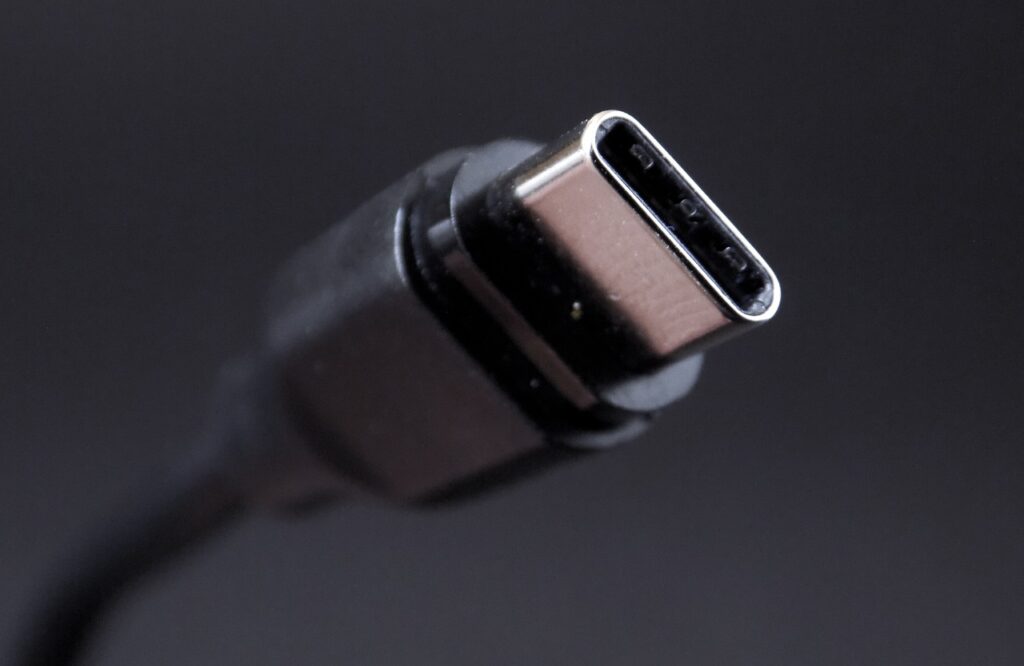
Why USB Type-C Is the Most Competitive Interface in 2025
USB Type-C has officially moved from a “new standard” to the mainstream interface across global devices.
From consumer electronics to industrial systems, medical devices, and automotive electronics, brands worldwide are fully transitioning to Type-C.
The shift is driven by three major factors:
1. Global Regulatory Requirements (Especially in the EU)
The EU’s mandate for a unified charging interface has pushed international brands to update product specifications.
Type-C adoption is no longer just a trend—it is a compliance requirement.
2. All-in-One Capability: Power, Data, and Video in One Connector
Type-C is not only a smaller connector—it integrates multiple functionalities:
-
High-speed data transfer (USB 3.2, USB4)
-
High-power delivery (PD 100W–240W)
-
Video output (DisplayPort Alt Mode / Thunderbolt)
-
Reversible plug for better usability
This allows brands to reduce the number of different ports on their devices, simplifying product design.
3. High Durability for Demanding Applications
A standard USB-C connector supports around 10,000 insertion cycles, significantly higher than Micro-USB (3,000–5,000 cycles).
This makes Type-C ideal for industrial and medical applications that require long-term reliability.
Key Technical Factors That Influence USB Type-C Cost and Performance
Achieving stable mass production for USB Type-C connectors or cables is more complex than it appears.
The following four technical factors have the greatest impact on cost and performance:
1. Terminal Material (e.g., C5191 Phosphor Bronze vs. High-Conductivity Copper)
Material selection affects:
-
Conductivity
-
Insertion durability
-
Mechanical strength
Higher-end cables often use premium materials to prevent fatigue and breakage.
2. Pin Plating Thickness (3–15µ″ Gold Plating)
Thicker plating improves oxidation resistance and contact stability.
Premium products such as 100W PD cables typically use thicker gold plating to extend service life.
3. Internal Cable Structure (E-Marker, AWG Size, Shielding Layers)
High-speed cables require:
-
An E-Marker chip for protocol and power management
-
Appropriate AWG wire size
-
Multi-layer shielding (braided copper + aluminum foil)
These elements directly determine the cable’s performance and cost.
4. Manufacturing Processes (Laser Welding, Ultrasonic Welding, etc.)
For example, laser welding reinforces mechanical strength, making USB-C cables more resistant to bending and daily use.
Products and Applications That Benefit Most From USB Type-C
1. Consumer Electronics
Smartphones, tablets, laptops, gaming devices, Bluetooth accessories, audio equipment.
2. Medical Devices
Stable data transfer and long connector life make Type-C ideal for monitoring and diagnostic equipment.
3. Industrial & Automation Systems
Suitable for environments requiring anti-interference and stable power delivery—such as PLCs and control panels.
4. Automotive Electronics
Car chargers, rear-seat entertainment, and charging modules are rapidly adopting Type-C.
Why Brands Need a Reliable USB Type-C Supplier More Than Ever in 2025
As Type-C’s functionality expands, customer expectations become more demanding:
-
Stable, consistent mass-production quality
-
Avoiding misleading specifications (e.g., claiming 100W without E-Marker)
-
Compliance with international market standards (EU, US, Japan)
-
Customizable cable solutions (length, materials, appearance, angled connectors, etc.)
A USB-C cable may look simple, but true quality depends on material selection and manufacturing precision.
Walta Electronic’s USB Type-C Solutions
Walta Electronic offers a complete range of Type-C products, including:
✔ USB Type-C Connectors (Receptacle / Plug)
-
Compatible with USB 3.0 / 3.2 / PD 100W / PD 240W
-
Strict control of pin structure and plating thickness
-
Excellent durability and stable mass-production quality
✔ USB Type-C Cables (USB 2.0, USB 3.0, USB 3.2, PD Charging)
-
E-Marker supported
-
AJ/AM/CM/CF options
-
Custom materials, colors, and braided/eco-friendly versions available
✔ Customized Wire Harness & Integrated Solutions
-
Medical device wire harnesses
-
Industrial automation wiring
-
Automotive electronic harnesses
-
OEM & ODM development support
Our engineering and production teams help customers optimize performance, cost, and time-to-market from product design to final mass production.
Conclusion: USB Type-C Is the Smartest Investment for 2025
With regulatory changes, technological maturity, and evolving market expectations, USB Type-C has become a global standard, not just an optional upgrade.
Walta Electronic will continue delivering high-quality, customizable, and globally competitive Type-C connectors and cable solutions to support your product evolution in 2025 and beyond.
🏢 About Walta Electronic
Walta Electronic specializes in high-quality connectivity solutions, providing a full range of USB Type-C, HDMI, DisplayPort connectors, Board-to-Board connectors, power connectors, as well as custom cables and wire harness assemblies. With precision manufacturing and advanced R&D, we serve premium applications across consumer electronics, medical technology, industrial control, Telecommunications, and automotive electronics — helping our partners stay competitive with performance they can trust.
👉 Follow us on LinkedIn for the latest product updates and connector insights.